
Tally Lake in the Flathead Valley of Montana: The Complete Guide

Tally Lake Entrance
Tally Lake Montana in Winter

If you’re looking for a “real Montana” lake day—clear mountain air, thick forest, cold-water swims, big-sky sunsets, and the kind of quiet you can actually hear—Tally Lake delivers. Tucked inside the Flathead National Forest west of Whitefish, this long, narrow lake feels wild and unspoiled, yet it’s easy to access for a weekend camping trip or a simple day-use escape. US Forest Service+1

What makes it truly stand out is its depth. Tally Lake is widely described as the deepest natural lake in Montana, and official bathymetry mapping puts its maximum depth at 495 feet.

Below is an extensive, search-friendly guide to Tally Lake—lake statistics, history, and the best things to do across every season.


Tally Lake Quick Facts and Statistics

Based on Montana Fish, Wildlife & Parks (FWP) mapping and waterbody data, here are the headline numbers for Tally Lake:

  • Surface Area: 1,211 acres

  • Elevation: 3,398 feet

  • Maximum Depth: 495 feet

  • Average Depth: 239 feet

  • Volume: 290,170 acre-feet

  • Location: Flathead County, Montana (FWP lists approx. 48.40176, -114.55508)

Why the depth matters: Deep lakes often fish differently than shallow lakes, warm up differently through the summer, and can be surprisingly “two-in-one”—warm near the surface on late-summer afternoons but cold and dark below.


Where Is Tally Lake?

Tally Lake sits in the Flathead Valley region of northwest Montana, on the Flathead National Forest, west of Whitefish.

Most visitors base out of:

  • Whitefish, MT (closest “full-service” town feel)

  • Kalispell, MT (more shopping, more lodging options)

The lake is accessed via forest roads, and the main developed recreation hub is Tally Lake Campground on the north end of the lake.


A Short History of the Tally Lake Area

Long before modern campgrounds and trailhead signs, the Flathead region has been home to Indigenous peoples for thousands of years, with deep cultural roots across western Montana. Today, the Confederated Salish and Kootenai Tribes (CSKT) represent the Bitterroot Salish, Upper Pend d’Oreille, and Kootenai, whose traditional territories covered broad areas of the region. 

The logging era and “splash dam” history

Northwest Montana has a strong timber history, and parts of the Flathead National Forest landscape were shaped by early logging practices. Historical records for the Forest describe the use of splash dams—structures built to temporarily hold water and then release it to move logs downstream. Notably, the Flathead National Forest historical overview documents that a splash dam was built on Tally Lake for Stillwater log drives in the early 1900s era of timber transport.

Recreation growth on the Flathead National Forest

By the mid-20th century, recreation use on the Flathead National Forest grew rapidly, and historical documentation specifically calls out heavy use of destinations including the Tally Lake Campground during that boom period.


Best Things to Do at Tally Lake

1) Camp at Tally Lake Campground

If you want the classic experience—morning coffee in the pines, a mid-day swim, and a calm-water sunset—camping is the move.

What to know (official campground details):

  • Operated on the Flathead National Forest

  • Overnight fees: single sites listed at $22/night, group sites $150/night, plus extra vehicle fees

  • Reservations/fee details: commonly routed through Recreation.gov

  • Important rule: dogs are not allowed on the beach

Pro tip for Flathead Valley summers: Weekends can book quickly. If you can swing midweek, you’ll often get more quiet, more shoreline space, and easier boat ramp timing.


2) Swim and Beach Day (with mountain-lake vibes)

Tally Lake is a go-to summer swim spot for locals, especially because it feels remote and natural—no heavy development wrapping the shoreline.

A few practical notes:

  • Mountain-lake temperatures can be brisk early in the season.

  • Bring water shoes if you’re sensitive to rocky entry points.

  • Always keep an eye on wind and weather—mountain storms can roll in faster than expected.


3) Boating, kayaking, paddleboarding, and canoeing

Because Tally Lake is long and narrow, it’s great for paddlers looking for scenic mileage. Early mornings usually offer the calmest surface for kayaking and stand-up paddleboarding.

If you’re using a motorboat, remember you’re sharing space with swimmers and paddlers—slow down near shore, and be extra cautious around the day-use areas and beach zones.


4) Fishing Tally Lake

Tally Lake is a popular fishing destination in Montana’s Region 1, and FWP provides official lake mapping and lake data through FishMT. myfwp.mt.gov+1

Anglers commonly target cold-water species and perch, and you’ll want to check the current Montana fishing regulations before you go (seasons, limits, and any special rules can change year to year).

Best times to fish:

  • Spring/early summer: shoreline action can be strong as water temps climb

  • Late summer: early/late in the day often beats the midday heat

  • Fall: crisp mornings, fewer crowds, and great “Montana lake” atmosphere


5) Hike to a viewpoint: Tally Lake Overlook Trail #804

If you want a quick hike with a big payoff, the Tally Lake Overlook Trail (#804) is a local favorite. Official Flathead National Forest trail information lists Trail #804 at 2.0 miles.

Expect a short, punchy climb and a viewpoint that makes the lake’s long, fjord-like shape feel dramatic.

Trail tips:

  • Go early for cooler temps and calmer light for photos.

  • Pack bug spray in peak mosquito season.

  • Keep food secured and stay bear-aware (this is northwest Montana forest country).


6) Mountain biking and exploring forest roads

The Tally Lake area connects into a wider network of forest roads and trails on the Tally Lake Ranger District. Whether you’re biking, hiking, or taking a scenic drive, the surrounding forest gives you that “endless Montana” feeling—larch, fir, and big views when the canopy opens up.


7) Wildlife watching and photography

Wildlife is part of the deal around Tally Lake. You may spot:

  • Bald eagles or osprey over the water

  • Deer along the roads at dawn/dusk

  • Occasional bear or moose sign in quieter pockets

Bring binoculars, keep distance, and never feed wildlife.


Seasonal Guide: When to Visit Tally Lake

Summer (June–August)

Best for: swimming, paddleboarding, camping, beach days, family trips
Expect: the most people, the warmest surface water, the longest daylight

Fall (September–October)

Best for: hiking, photography, quieter camping, crisp mornings
Expect: fewer crowds and stunning color as larch and understory shift

Winter (November–March)

Best for: solitude, snowy forest scenery, and a true “Montana quiet” experience
Expect: limited services and changing road conditions—plan conservatively

Spring (April–May)

Best for: anglers, shoulder-season camping (when open), and waterfall/creek flow
Expect: muddy roads at times and variable weather

(For campground season specifics, always check the current status/alerts where you book or through the Forest Service listing.)


Know Before You Go: Helpful Rules and Good Etiquette

A few points that make everyone’s trip better:

  • Respect the beach dog restriction at the developed area.

  • Pack out trash (including fishing line).

  • Give paddlers and swimmers plenty of room if you’re boating.

  • Keep a clean camp—store food properly and don’t leave coolers out.


Why Tally Lake Belongs on Your Montana Bucket List

Tally Lake checks a rare box in the Flathead Valley: it feels remote and wild, but it’s still accessible enough to enjoy without an expedition-level plan. With official mapping showing 1,211 acres, a 3,398-foot elevation, and a striking 495-foot maximum depth, it’s also one of the most unique lakes to explore in Montana.

Whether your ideal day is paddling glassy water at sunrise, camping under tall timber, hiking up to the overlook for the “wow” photo, or simply getting away from town for a quiet swim—Tally Lake is one of the Flathead Valley’s best-kept (but not-too-secret) outdoor gems.

Light Up the Night: The New Year’s Eve Torchlight Parade & Fireworks at Whitefish Mountain Resort

If there is one tradition that truly captures the magic of winter in Montana, it’s the New Year’s Eve Torchlight Parade & Fireworks at Whitefish Mountain Resort. As the sun sets on 2025, the slopes of Big Mountain transform into a glowing masterpiece, offering a spectacle that has become a “must-do” for locals and visitors alike.

A Ribbon of Light on Ed’s Run

As twilight falls, all eyes turn toward the mountain. Starting at 5:45 PM, a silent, glowing ribbon of light begins to descend Ed’s Run. This “ribbon” is actually a procession of expert skiers and riders carrying brightly lit torches, weaving their way down the mountain in a synchronized display of skill and holiday spirit.

It is a mesmerizing sight that perfectly sets the stage for the grand finale.

The Big Bang: Fireworks Under the Big Sky

Immediately following the parade, the sky above the Upper Village erupts in a massive fireworks display. Framed by the snow-covered pines and the silhouette of the Northern Rockies, it’s a breathtaking way to celebrate the final moments of the year.

Because the festivities wrap up by 6:30 PM, it’s the ultimate “early bird” celebration—spectacular enough to wow the adults, but early enough that the kids can enjoy the show before heading home for cocoa (or before the grown-ups head out for a late-night party!).


💡 Pro-Tips for the Best Experience

  • The Best Seat in the House: For the absolute best views of the parade and the fireworks, head to the patio of Ed & Mully’s. It’s located right at the base of Ed’s Run in the Upper Village, placing you directly in the “splash zone” for the mountain views.

  • Arrival & Parking: The village gets busy! Aim to arrive by 5:00 PM to find parking and secure your spot. Remember, the S.N.O.W. Bus is a great free option to avoid the parking scramble.

  • Layer Up: You’ll be standing outside for about an hour. Wear your warmest boots and don’t forget the hand warmers!

  • Night Skiing Note: Please be aware that Chair 2 typically closes around 5:00 PM to allow for parade preparations, but other lifts like Chairs 3 and 6 often remain open for those who want to get a few last turns in.


Event Details at a Glance

  • When: Wednesday, December 31, 2025

  • Time: 5:30 PM – 6:30 PM (Parade starts at 5:45 PM)

  • Where: Whitefish Mountain Resort (Upper Village / Ed’s Run)

  • Cost: FREE for spectators!

Cruise the Blues: Your Next Family Adventure at Whitefish Mountain Resort!

Cruise the Blues: Your Next Family Adventure at Whitefish Mountain Resort!

Hey Skiers and Riders! Are you ready to add an extra layer of excitement to your day on the slopes? This holiday season, Whitefish Mountain Resort is thrilled to announce a brand-new event that’s perfect for families, friends, and anyone looking for a fun challenge: the Cruise the Blues Scavenger Hunt!

When: Saturday, December 27, 2025 | 9:00 AM – 4:00 PM Where: Whitefish Mountain Resort, Whitefish, Montana Cost: FREE to participate with a valid lift ticket!

What’s It All About?

Get ready to explore the stunning terrain of Whitefish Mountain Resort like never before! The Cruise the Blues Scavenger Hunt is designed to take you on an exciting journey across our fantastic intermediate “blue” runs. It’s not just about skiing; it’s about discovery, teamwork, and a whole lot of laughs.

Here’s how it works:

  1. Grab Your Clues: On the morning of December 27th, head to the Base Lodge to pick up your official Scavenger Hunt clue sheet.

  2. Hit the Blues: With your clues in hand, it’s time to hit the slopes! You’ll be navigating across various blue runs, searching for hidden markers, solving riddles, and completing fun tasks that will lead you to your next destination.

  3. Explore and Discover: This is your chance to really get to know the mountain. Whether you’re a seasoned local or visiting for the first time, you might just discover a new favorite trail or a breathtaking viewpoint you’ve never noticed before.

  4. Finish Strong: Once you’ve completed all the challenges and collected all your answers, return to the designated finish line at the Base Lodge by 4:00 PM to submit your entry.

Why You Can’t Miss This!

Family-Friendly Fun: This event is tailor-made for families! It’s a fantastic way to encourage teamwork, get everyone involved, and create unforgettable memories on the mountain. Intermediate skiers and riders will find this particularly engaging, but all skill levels can participate and enjoy the journey.

Explore Whitefish’s Best: Our blue runs offer some of the most scenic and enjoyable skiing on the mountain. The scavenger hunt will guide you through diverse terrain, ensuring a full day of adventure.

Awesome Prizes: What’s a hunt without a reward? Those who successfully complete the Cruise the Blues Scavenger Hunt will be entered into a drawing for some fantastic prizes, including Whitefish Mountain Resort swag, gift certificates, and more! Details on specific prizes will be available at registration.

It’s FREE! That’s right, all you need is your lift ticket, and the adventure is yours for the taking. It’s a perfect way to add extra value and excitement to your ski day without any additional cost.

Tips for a Successful Hunt:

  • Dress Warm: December on the mountain can be chilly, so layer up!

  • Team Up: While you can participate solo, it’s often more fun with a group. Designate a clue master and a navigator!

  • Bring a Camera: You’ll want to capture the stunning views and hilarious moments.

  • Know Your Blues: Familiarize yourself with the resort map beforehand to get a general idea of the blue runs.

  • Have Fun: Above all, enjoy the experience!

Don’t miss out on this exciting new tradition at Whitefish Mountain Resort. Mark your calendars for Saturday, December 27th, and get ready to Cruise the Blues! We can’t wait to see you there!

Don’t Get Left in the Cold: The Flathead Valley Christmas Day Survival Guide

Christmas in Whitefish Montana

While most of the Flathead Valley settles in for a quiet day at home, there are plenty of ways to make the most of Christmas Day in our winter wonderland. Whether you’re looking to carve some turns, enjoy a world-class buffet, or find a peaceful spot in the park, here is your 2025 guide to what’s open on December 25th.


⛷️ Outdoor Adventures

If your ideal Christmas involves fresh air and mountain views, you’re in luck. The valley’s major recreation spots are ready for you.

  • Whitefish Mountain Resort: The lifts spin from 9:00 AM to 4:00 PM. It’s a local tradition to spot Santas and elves skiing down the slopes. Note that the S.N.O.W. Bus usually runs on its holiday schedule, making it easy to get from downtown Whitefish to the Village.

  • Blacktail Mountain: Typically open from 9:00 AM to 4:00 PM. It’s often a bit quieter than Big Mountain, offering a “local” vibe and incredible views of a frozen Flathead Lake.

  • Glacier National Park: The park is open 24/7, 365 days a year. While the visitor centers are closed on Christmas Day, you can still drive to Apgar Village or Lake McDonald Lodge (exterior access) for a snowshoe or a quiet winter hike. Note: You still need a park pass, which can be purchased online or at self-pay stations.


🍽️ Christmas Dining & Drinks

Forget the dishes! Several premier valley restaurants offer special holiday menus, but reservations are essential.

VenueEvent/SpecialHours
The Lodge at Whitefish LakeGrand Christmas Buffet (Boat Club)2:00 PM – 9:00 PM
The Firebrand Hotel3 or 4-Course Dinner + Live Music3:00 PM – 8:00 PM
Grouse Mountain LodgeLogan’s Bar & Grill Holiday Dinner4:00 PM – Close
Craggy Range Bar & GrillBrats & Brews (Whitefish)Starts at 5:00 PM
Bigfork VFWChristmas Bingo & Bar ServiceStarts at 5:30 PM

Local Tip: Many bars in downtown Kalispell and Whitefish open their doors in the evening (around 6:00 PM or 8:00 PM) for those looking for a “nightcap” after family festivities.


🏛️ Local Sightseeing & Events

While museums like the Conrad Mansion are closed on Christmas Day itself, the grounds are often open for a festive stroll to see the exterior lights.

  • Self-Guided Light Tours: Take a drive through the Bigfork Village (the Christmas Village of Montana) or the Kalispell East Side to see the historic homes decked out in lights.

  • Worship Services: Most valley churches (like St. Matthew’s in Kalispell or Whitefish Assembly) hold special Christmas morning services.


💡 Know Before You Go

  1. Gas & Groceries: Most major grocery stores (Safeway, Smith’s, Albertsons, Costco) will be closed. Ensure you have your essentials by the 24th.

  2. Reservations: If you plan to eat out, call today. Tables for Christmas Day often fill up weeks in advance.

  3. Weather: Check the MDT Road Report if you’re traveling between towns, as snow plows may have limited holiday shifts.

Montana Winter Safety: Essential Gear for Your Car, Trails, and Dogs

Montana essential Winter survival gear

⚠️ Montana Winter Safety: Essential Gear for Your Car, Trails, and Dogs

A 406.Buzz Preparedness Guide

The Flathead Valley in the winter is breathtaking—a true Big Sky Country postcard. But winter in Montana is serious business, and conditions can change in a matter of minutes. Whether you’re cruising the backroads, heading up a snowy forest service road, or setting out on a remote backcountry trail, preparation is the key to a safe and enjoyable adventure.

Use this guide to ensure you have the necessary gear for every kind of winter outing, including what should be in your vehicle, your backpack, and what to bring for your four-legged companion.


🚗 The Montana Car Emergency Kit: Your Winter Lifeline

Getting stuck or stranded on an icy or remote road is the most common winter emergency. You must be prepared to self-rescue or wait for help safely. Keep this full kit in a durable container or duffel bag in your car from November through April.

CategoryEssential ItemsWhy You Need It
Traction & RecoveryCollapsible Shovel, Bag of Sand or Cat Litter, Jumper Cables or Portable Starter Pack.For digging out and gaining crucial traction on ice. The shovel is a non-negotiable item.
Warmth & SurvivalWool Blanket or Sleeping Bag, Extra Hat, Gloves, & Socks (wool/synthetic), Candles and Matches/Lighter.To prevent hypothermia if stranded. A single candle can generate significant heat inside a car.
Communication & LightHeadlamp/Flashlight (with extra batteries), Cell Phone Charger / Power Bank, Flares or Reflective Triangles.To signal for help and work hands-free in the dark. Tip: Consider a NOAA Weather Radio for updated conditions.
SustenanceWater (several insulated bottles), Non-Perishable, High-Calorie Snacks (energy bars, dried fruit, nuts).Hydration and energy are critical for staying warm and alert. Keep the tank full to run the engine sparingly for heat.
Safety & VehicleFirst Aid Kit, Ice Scraper/Brush, Tow Strap or Rope, Basic Tool Kit.Do not forget to check the current road conditions by calling 511 in Montana before you leave.

🥾 Backcountry Safety: Hitting the Trails

When you leave the trailhead, you leave the pavement and services behind. Whether you’re snowshoeing or XC skiing, your pack must contain more than just lunch.

The 10 Essentials Plus Winter Gear

  • Layering System: NO COTTON. Start with a moisture-wicking synthetic or wool Base Layer, add a warm Mid-Layer (fleece or down), and top with a waterproof/windproof Outer Shell (jacket and pants).

  • Traction/Flotation: Bring Microspikes for icy trails. If there’s deep snow, you need Snowshoes or XC Skis to avoid post-holing and injury.

  • Navigation: Always carry a Map & Compass in addition to your phone. Know how to use them!

  • Sun Protection: Snow reflects up to 80% of UV rays. Carry Sunscreen and Sunglasses (or goggles)—snow blindness is a risk.

  • Insulation & Fire: An extra puffy jacket, a fire starter, and dry kindling (even in a small bag) are non-negotiable for emergency warmth.

  • Communication: Whistle, charged phone, and know the nearest emergency contact numbers for the area you are in (e.g., Glacier Park dispatch).

  • Avalanche Danger: If you plan on going into high-elevation or steep terrain (like parts of Glacier National Park), everyone in your party must have and know how to use an Avalanche Transceiver, Probe, and Shovel. ALWAYS check the Flathead Avalanche Center report.


🐾 Bringing Your Best Friend? Gear for Dogs

Your furry friend needs protection from the cold, ice, and road chemicals (like mag chloride) just as much as you do.

  • Paw Protection: Dog Booties or a paw wax like Musher’s Secret are crucial to prevent ice balls from forming between pads and protecting against frostbite and chemicals.

  • Insulation: Bring a warm, Insulated Dog Coat—especially for short-haired breeds or small dogs, or whenever temperatures dip below 20°F.

  • Visibility: Use a Reflective Vest or LED Collar since daylight hours are short.

  • Hydration: Bring a dedicated Dog Water Bowl and plenty of water; dogs can get dehydrated quickly in cold, dry weather.

  • Leash Laws: Remember that dogs are typically NOT allowed on most trails in Glacier National Park, even in winter (except for plowed roads and developed areas). Always know the local rules before you go!


Stay safe out there, Flathead! What’s one essential item you never leave home without in a Montana winter? 

#406Buzz #MontanaWinter #WinterSafety #FlatheadValley #GlacierNationalPark #Preparedness

Beyond the Slopes: Your Guide to the Flathead Valley’s Best Snowshoe and Cross-Country Trails

Beyond the Slopes: Your Guide to the Flathead Valley's Best Snowshoe and Cross-Country Trails

❄️ Beyond the Slopes: Your Guide to the Flathead Valley’s Best Snowshoe and Cross-Country Trails


Introduction: Discovering the Quiet Side of Winter

The Flathead Valley is famous for Whitefish Mountain Resort, but for many locals and visitors, the best way to experience a Montana winter is beyond the slopes. If you’re looking for a peaceful, affordable, and incredibly scenic way to enjoy the snow, snowshoeing and cross-country (XC) skiing are your perfect choice. From the iconic silence of Glacier National Park to the local, groomed loops near Kalispell, here is your essential guide to the best winter trails in Northwest Montana.


🏔️ Glacier National Park: Winter Silence and Solitude

Once the Going-to-the-Sun Road closes for the season, the park transforms into an accessible, non-motorized winter wonderland. Be aware that services are limited, and you must check current avalanche conditions and park regulations before setting out.

Lake McDonald Road & Apgar Village

  • Activity: XC Skiing, Snowshoeing, Winter Walking

  • Location: West Glacier Entrance

  • Details: The plowing stops at the Lake McDonald Lodge, leaving miles of vehicle-free road perfect for skate skiing or classic cross-country. For a gentler snowshoe path, explore the trails around Apgar Village, like the Inner North Fork Road.

  • Pro Tip: Look for animal tracks—this area is a hub for wildlife in the winter.

Two Medicine Valley (East Side)

  • Activity: Snowshoeing (Intermediate)

  • Location: East Glacier (Accessible via Hwy 49)

  • Details: Though remote, the Two Medicine entrance offers stunning, secluded views. The road to the lake is not maintained, so be prepared for a longer, more challenging snowshoe trek. Only attempt with proper gear and preparation.


🎿 Whitefish Area: Groomed Trails for Every Skill Level

The Whitefish community provides excellent options, many of which are regularly groomed by local non-profit groups, making them ideal for high-quality cross-country skiing.

The Whitefish Trail

  • Activity: XC Skiing, Snowshoeing

  • Location: Multiple trailheads (e.g., Lion Mountain, Spencer Mountain)

  • Details: This extensive trail network offers incredible flexibility. Check local grooming reports for up-to-date conditions on loops perfect for skate or classic skiing. Snowshoers can usually enjoy the ungroomed, single-track paths alongside the ski trails.

Glacier Nordic Center

  • Activity: Dedicated XC Skiing (Lessons and Rentals available)

  • Location: Adjacent to the Whitefish Lake Golf Course

  • Details: A premier destination for cross-country skiers, offering 12+ kilometers of professionally groomed trails. This is the best choice for beginners needing rentals or lessons, or advanced skiers seeking quality training loops.


🌲 Kalispell’s Local Gems: Herron Park and Foys to Blacktail

For easy access right outside of Kalispell, these parks offer trails often maintained by local volunteers, making them a favorite for afternoon outings.

Herron Park

  • Activity: Snowshoeing, XC Skiing

  • Location: West of Kalispell

  • Details: A popular multi-use park. The main loops are often track-set for classic skiing after fresh snowfalls. It’s a fantastic spot for a quiet forest outing with rolling hills, perfect for snowshoers looking for a good workout.

Foys to Blacktail Trails

  • Activity: Snowshoeing (Intermediate/Advanced)

  • Location: South of Foys Lake

  • Details: These trails offer higher elevation and more challenging terrain, which often means deeper snow and incredible views of the Flathead Valley. Excellent for those seeking a longer, more strenuous snowshoe hike.


🧤 Essential Gear and Winter Safety Tips for Flathead Trails

Winter adventure in Montana is rewarding, but requires preparation. Be smart and stay safe!

  • Dress in Layers: Avoid cotton. Use synthetic fabrics or wool to wick away moisture.

  • Check Conditions: Always check the Flathead Avalanche Center report, especially if traveling in Glacier National Park or high-elevation areas.

  • Water & Food: Carry more than you think you need. Dehydration is a major risk in cold weather.

  • Tell Someone: Inform a friend or family member exactly where you are going and when you expect to return.

  • Dog Friendly: Most National Forest and local trails are dog-friendly, but Glacier National Park does not allow dogs on most winter trails (except the Apgar area roads).


Conclusion

Whether gliding through fresh powder on cross-country skis or crunching silently along a ridge in snowshoes, getting Beyond the Slopes is a quintessential Flathead Valley experience. Grab your gear, enjoy the silence, and discover the true beauty of a Montana winter.

Do you have a favorite hidden trail? Let us know in the comments below!

Kootenai Falls: Montana’s Majestic Waterfall & Swinging Bridge

Kootenai Falls

Kootenai Falls: Montana’s Majestic Waterfall & Swinging Bridge

Nestled in the rugged landscapes of Lincoln County, Montana, Kootenai Falls stands as a testament to nature’s grandeur and spiritual significance. As the largest undammed waterfall in the state, it offers visitors a unique blend of natural beauty, cultural heritage, and outdoor adventure.

A Sacred Site with Rich History

For the Kootenai Tribe, the falls are more than just a natural wonder—they are a sacred site viewed as the “center of the world,” where tribal members commune with spiritual forces. In the early 1800s, Canadian explorer David Thompson navigated this area, following trails marked by the Kootenai people.

Location & Access

Kootenai Falls is located along U.S. Route 2, approximately 12 miles west of Libby and 6 miles east of Troy. The falls are accessible via a short hike from a well-marked parking area on the north side of the highway.

Geological Marvel

The falls are part of the Kootenai River, which drops 90 feet over a series of rapids and cascades within a mile. The main waterfall boasts a 30-foot drop and spans nearly 1,000 feet in width, making it one of the widest waterfalls in the United States.

The Iconic Swinging Bridge

Just downstream from the falls lies the Kootenai Falls Swinging Bridge, a 210-foot-long suspension bridge originally constructed in the 1930s by the Civilian Conservation Corps to aid firefighting efforts. Rebuilt in 2019 to accommodate increasing visitors, the bridge offers panoramic views of the river and surrounding forest.

Hiking & Wildlife

Visitors can embark on a 1.6-mile round-trip hike that leads to both the falls and the swinging bridge. The trail begins with a level path, followed by a descent over a railroad overpass and a series of stairs. Along the way, hikers may encounter diverse wildlife, including bighorn sheep, black bears, moose, and bald eagles.

Nearby Attractions

  • Kootenai National Forest: Encompassing over 2.2 million acres, this forest offers opportunities for hiking, camping, and wildlife viewing.

  • Lake Koocanusa Scenic Byway: A 67-mile drive along Highway 37, providing stunning views of the lake and access to recreational activities.

  • Cabinet Mountains Wilderness: Located within the Kootenai National Forest, this area features rugged, glacier-carved mountains ideal for backcountry exploration.

Visitor Tips

  • Best Time to Visit: Late spring to early summer offers the most impressive water flow.

  • Facilities: The parking area includes restrooms, picnic tables, and a seasonal concession stand.

  • Safety: Exercise caution near the water’s edge, as there are no guardrails. Keep a safe distance from wildlife and supervise children closely.

Conclusion

Kootenai Falls is a must-visit destination for those seeking natural beauty, cultural depth, and outdoor adventure. Whether you’re passing through on a road trip or planning a dedicated visit, the falls and their surrounding attractions offer an unforgettable Montana experience.

Running Eagle Falls

Running Eagle Falls, Two Medicine, Glacier National Park

Running Eagle Falls: A Tribute to a Blackfeet Warrior in Glacier National Park

Nestled within the serene Two Medicine Valley of Glacier National Park, Running Eagle Falls stands as both a natural marvel and a monument to the indomitable spirit of a legendary Blackfeet woman warrior. Known also as Trick Falls, this unique waterfall offers visitors not only breathtaking views but also a deep connection to the rich cultural tapestry of the region.

The Legacy of Running Eagle (Pitamakan)

Running Eagle, born Pi’tamaka or Brown Weasel Woman, was a member of the Piikáni (Piegan) band of the Blackfeet Nation. Defying the gender norms of her time, she pursued the path of a warrior, mastering hunting and combat skills traditionally reserved for men. Her courage was epitomized during a hunting expedition when she rescued her father under enemy fire, an act that earned her the right to sing the Victory Song and participate in the Scalp Dance—honors seldom bestowed upon women.

Seeking spiritual affirmation of her warrior role, Running Eagle embarked on a vision quest near the very falls that now bear her name. There, she received a vision from the sun, promising her success in battle if she vowed never to marry. Embracing this path, she led numerous successful raids and was eventually honored with the male warrior name “Running Eagle,” a title reflecting her exceptional status. Her life was tragically cut short in battle against the Flathead tribe after 1878, but her legacy endures in the landscapes of Glacier National Park.

Exploring Running Eagle Falls

Running Eagle Falls is renowned for its distinctive two-tiered cascade. During spring and early summer, snowmelt creates an upper waterfall that flows over the cliff, concealing the lower falls. As the season progresses and water levels recede, the upper falls diminish, revealing the lower cascade that appears to emerge mysteriously from the rock face—a phenomenon that inspired the nickname “Trick Falls.”

Trail Details

  • Distance: 0.6 miles (0.96 km) round trip

  • Elevation Gain: Approximately 30 feet (9 meters)

  • Difficulty: Easy; suitable for families and accessible for wheelchairs up to the viewing platform

  • Trailhead Location: Approximately 1.1 miles west of the Two Medicine entrance station

The trail meanders through a lush forest, crosses a wooden footbridge, and culminates at a viewing platform offering stunning vistas of the falls. Interpretive signs along the path provide insights into the area’s natural and cultural history.

Best Times to Visit

  • Late Spring to Early Summer (May–June): Witness the dual cascades during peak snowmelt.

  • Mid to Late Summer (July–August): Enjoy clearer views of the lower falls and warmer temperatures.

  • Early Morning or Late Afternoon: Experience softer lighting for photography and increased chances of wildlife sightings, such as moose near the creek.

Getting There

From Highway 49, turn onto Two Medicine Road and drive approximately 4.5 miles west to reach the parking area for Running Eagle Falls. The trailhead is clearly marked, and restrooms are available at the parking lot. Note that during peak summer months, Glacier National Park requires vehicle reservations for certain areas, including Two Medicine. Be sure to check the National Park Service website for the latest information on reservations and park fees.

Tips for Visitors

  • Bear Safety: Carry bear spray and remain vigilant, as Glacier National Park is home to both black and grizzly bears.

  • Footwear: Wear sturdy shoes suitable for uneven terrain, especially if you plan to explore beyond the viewing platform.

  • Stay on Designated Trails: To protect the delicate ecosystem and for your safety, avoid venturing off-trail.

  • Leave No Trace: Pack out all trash and respect the natural environment.

Honoring a Heroine

Running Eagle Falls is more than a scenic destination; it is a place of profound cultural significance. For the Blackfeet Nation, the falls are a sacred site, commemorating a woman whose life challenged societal norms and whose bravery continues to inspire. As you stand before the cascading waters, take a moment to reflect on Running Eagle’s legacy—a testament to courage, resilience, and the enduring spirit of the Blackfeet people.

Explore Two Medicine Lake: Glacier National Park’s Hidden Secret

Two Medicine Lake: Glacier National Park

Explore Two Medicine Lake: Glacier National Park’s Hidden Secret

Nestled in the southeastern corner of Glacier National Park, Two Medicine Lake offers a tranquil retreat away from the park’s more frequented areas. Once a primary destination before the Going-to-the-Sun Road was constructed, this area now provides visitors with breathtaking scenery, diverse hiking opportunities, serene waterfalls, and a rich cultural history.

Hiking Trails for Every Adventurer

Two Medicine boasts a variety of trails suitable for all skill levels:

  • Running Eagle Falls Trail: An easy 0.3-mile accessible trail leading to the unique “Trick Falls,” where water cascades from two different sources.

  • Aster Falls Trail: A gentle 1.2-mile hike to a picturesque waterfall, ideal for families.

  • Rockwell Falls Trail: A 3.5-mile trek through forests and meadows culminating at the stunning Rockwell Falls.

  • Scenic Point Trail: A challenging 3.9-mile ascent offering panoramic views of the Two Medicine Valley.

  • Dawson-Pitamakan Loop: A strenuous 17.4-mile loop traversing high alpine passes with sweeping vistas.

Waterfalls Worth the Walk

The area is home to several captivating waterfalls:

  • Running Eagle Falls: Also known as “Trick Falls,” this unique waterfall appears to emerge from a cave during certain times of the year.

  • Twin Falls: Accessible via a 3.5-mile hike or a combination of boat ride and shorter hike, these twin cascades are a serene spot for relaxation.

  • Rockwell Falls: A multi-tiered waterfall reached by a moderate hike, offering a peaceful setting amidst lush surroundings.

Running Eagle Falls: Also known as "Trick Falls"
Running Eagle Falls: Also known as “Trick Falls”

Camping Amidst Nature

Two Medicine Campground provides 100 campsites near the lake, operating on a first-come, first-served basis. Amenities include potable water, restrooms, and proximity to trailheads. Note that the campground will be closed for construction starting September 16, 2025.

For a more rustic experience, No Name Lake Campground offers backcountry camping accessible via a 5-mile hike.

Boating and Rentals

Experience the lake’s tranquility with a boat tour or rental:

  • Boat Tours: The historic “Sinopah” boat offers narrated tours across Two Medicine Lake, providing insights into the area’s history and geology.

  • Boat Rentals: Kayaks, canoes, rowboats, and motorboats are available for rent, allowing visitors to explore at their own pace.

Concessions and Amenities

The Two Medicine General Store offers snacks, beverages, souvenirs, and basic camping supplies. It’s a convenient stop for hikers and campers alike.

Getting There

Two Medicine Lake is approximately 13 miles from East Glacier Park. From U.S. Highway 2, take Montana Highway 49 north to the Two Medicine Road, then drive west to the lake. The route is well-marked and offers scenic views along the way.


Whether you’re seeking adventure or tranquility, Two Medicine Lake provides a memorable experience amidst Glacier National Park’s natural splendor.

Explore Polebridge Montana & Historic Polebridge Mercantile

Polebridge Montana & Historic Polebridge Mercantile

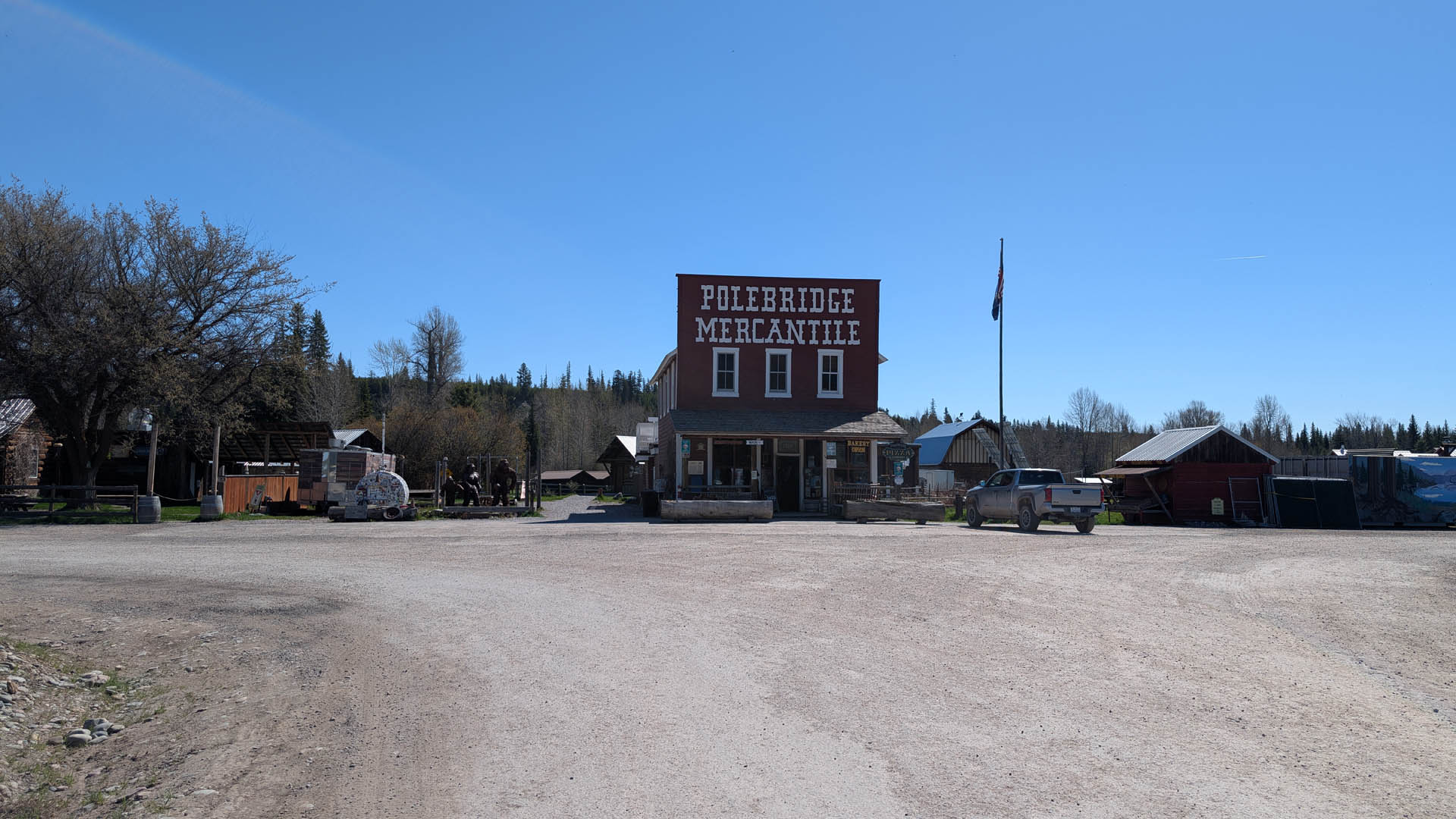
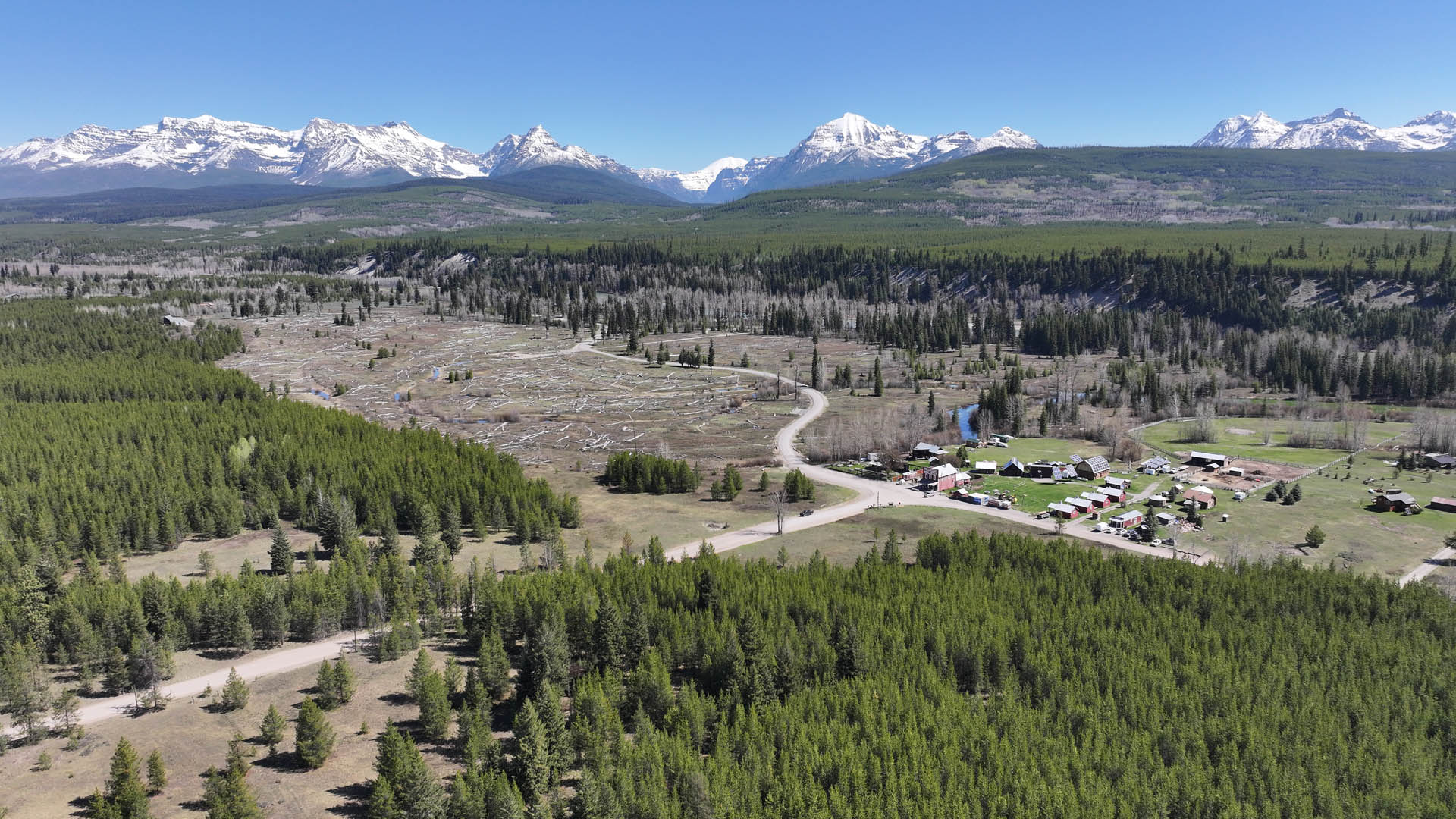
Nestled in the remote wilderness of northwestern Montana, Polebridge is a hidden gem that offers a unique blend of history, rustic charm, and unparalleled access to the natural wonders of Glacier National Park. At the heart of this tiny, off-the-grid community lies the iconic Polebridge Mercantile, a century-old establishment that continues to serve as a beacon for adventurers and nature enthusiasts alike. (Polebridge Mercantile and Bakery)

🏔️ A Glimpse into Polebridge’s Past

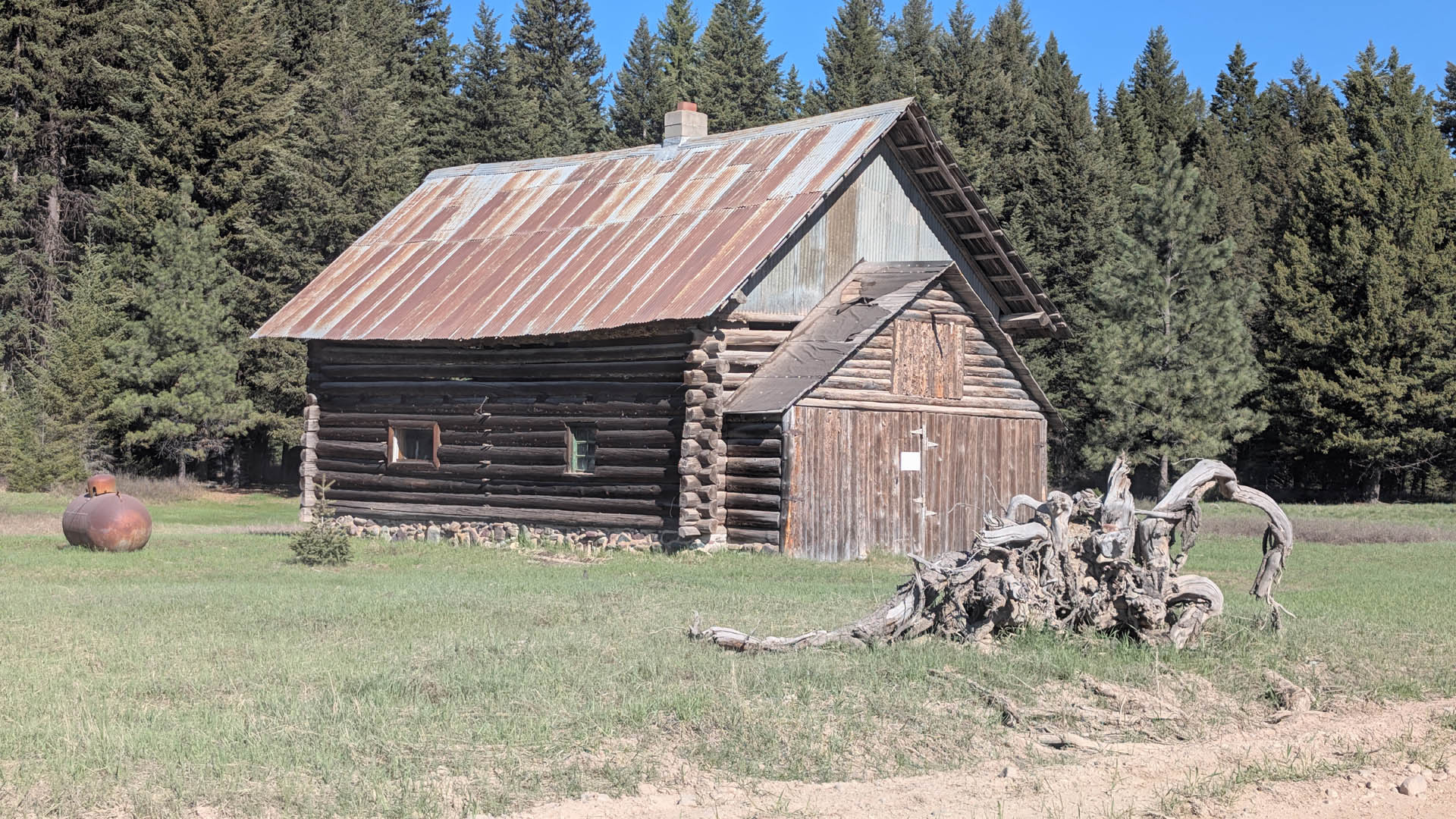
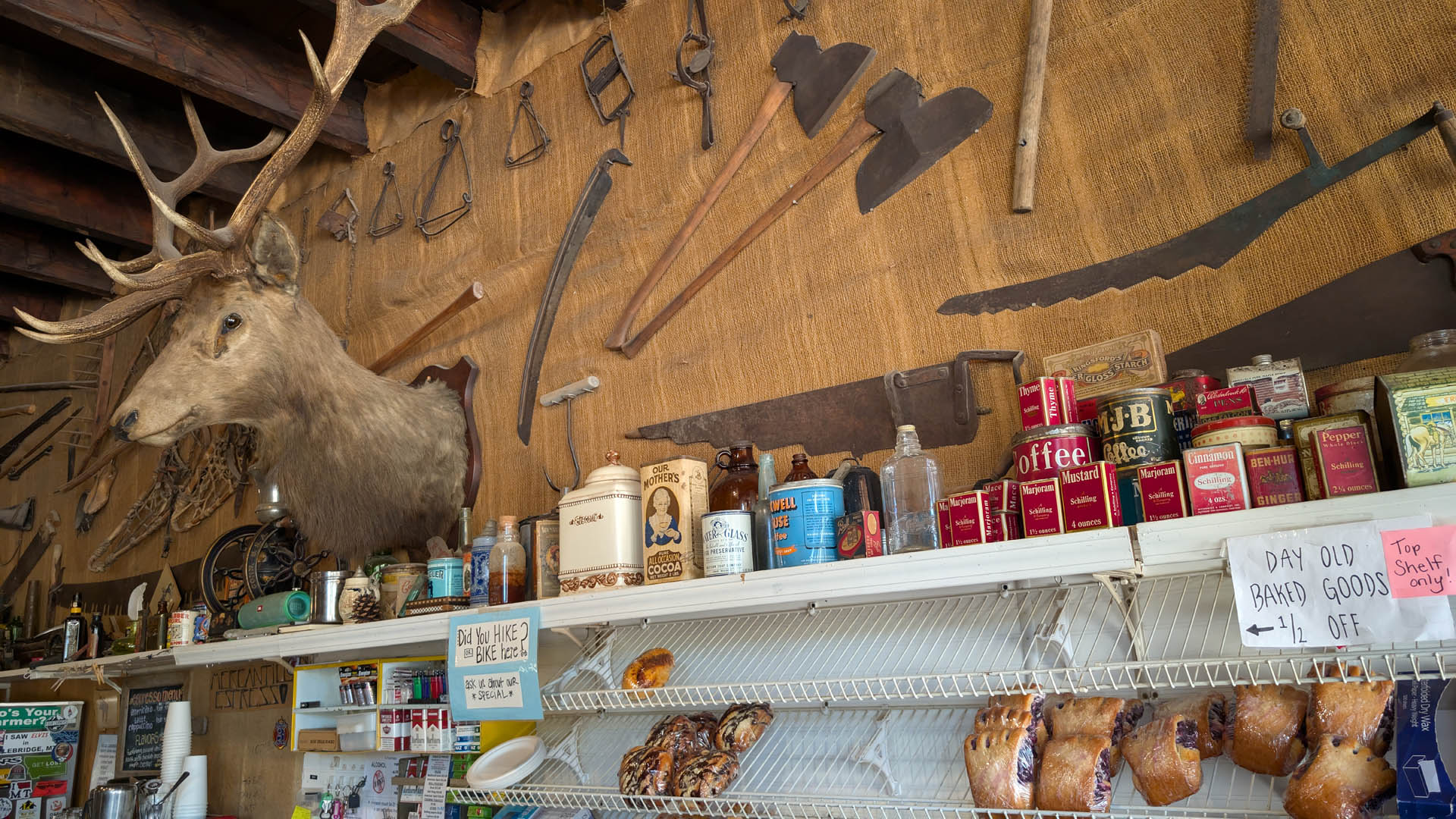
Established in 1914 by William L. “Bill” Adair, the Polebridge Mercantile has been a cornerstone of the North Fork community for over a century. Originally known as Adair’s, the Mercantile was more than just a store; it was a gathering place for homesteaders and travelers in the rugged Montana frontier. Adair’s wife managed the store while he tended to their homestead, which included growing king-sized cabbages and fishing with a single fly, the Coachman. The Mercantile’s log walls, hand-hewn by Adair himself, still stand today, adorned with the same wallpaper he applied over a hundred years ago.

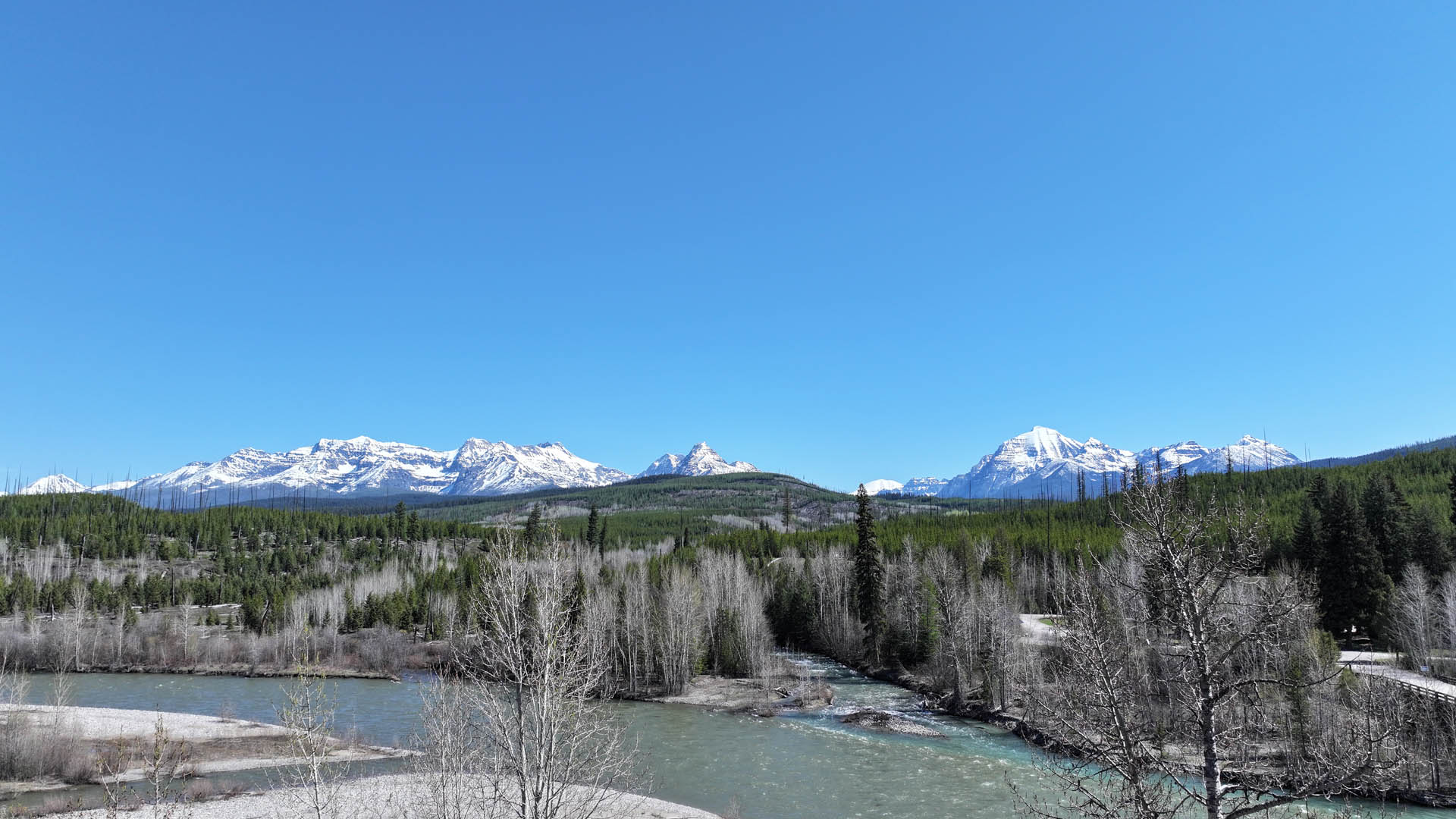
The community of Polebridge, named after a log bridge that once spanned the North Fork Flathead River, remains largely unchanged, preserving its rustic charm and historical significance. With no electricity or cell service, Polebridge offers a true escape from modern life, allowing visitors to immerse themselves in the tranquility of nature.


🥐 The Polebridge Mercantile: A Culinary Oasis

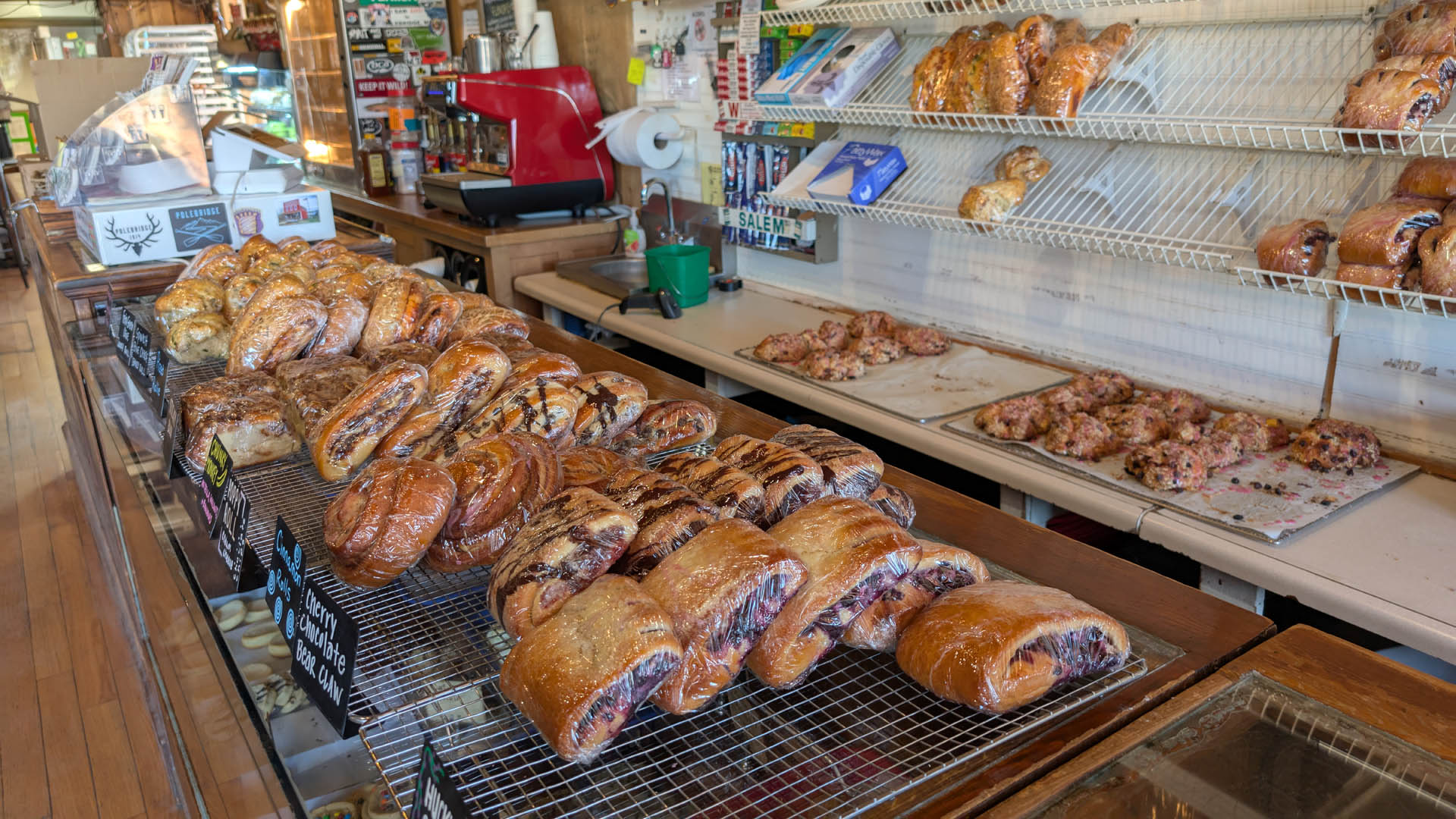
Today, the Polebridge Mercantile continues to serve as a general store, bakery, and base camp for explorers venturing into Glacier National Park. Renowned for its delectable baked goods, the Mercantile offers an array of treats, including their famous huckleberry bear claws, cinnamon rolls, macaroons, and fresh-baked bread. Visitors can also enjoy deli sandwiches, signature pizzas, and a selection of beverages ranging from Montana microbrews to huckleberry soda. 

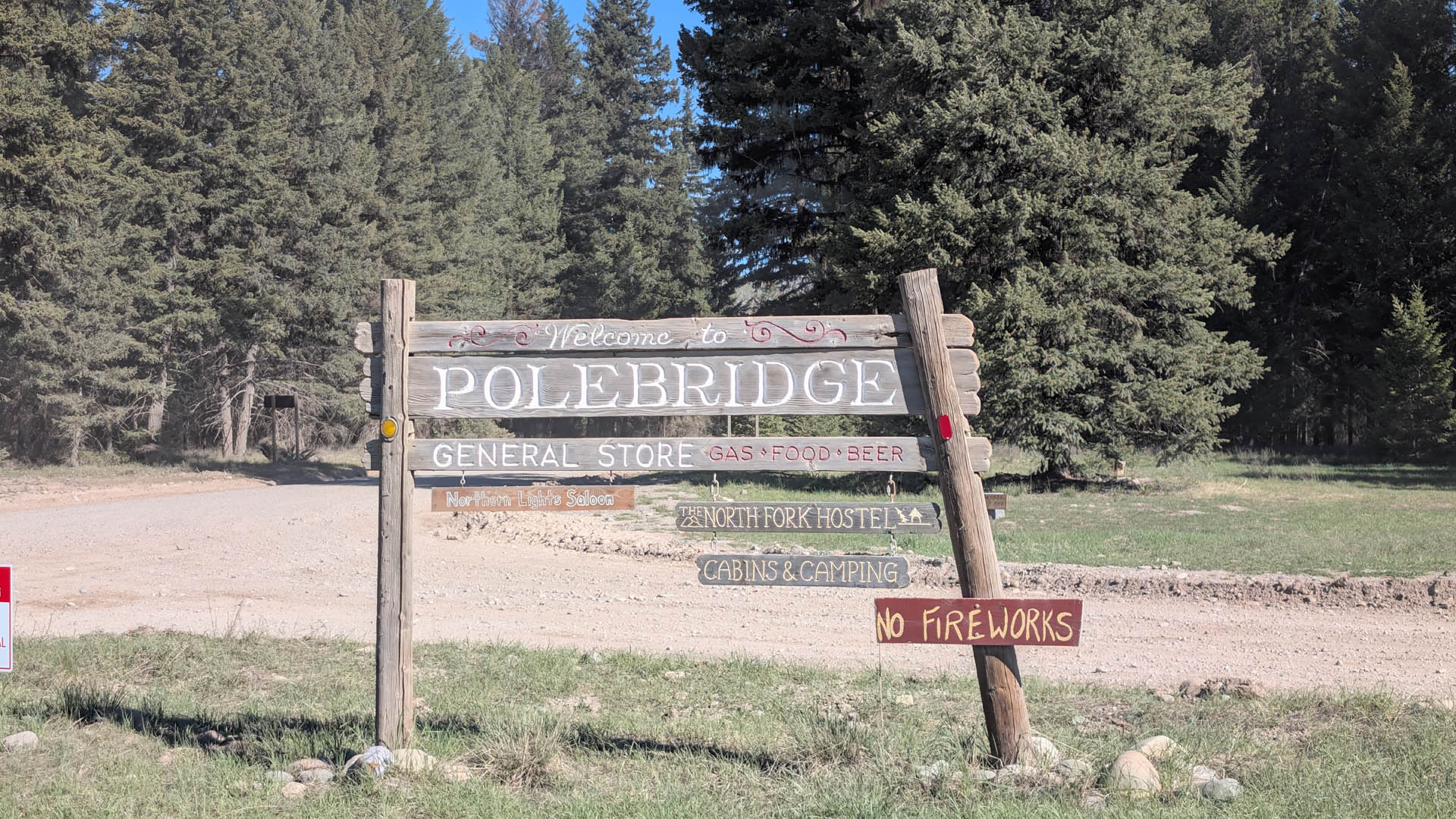
Adjacent to the Mercantile, the Northern Lights Saloon—once the Adair homestead cabin—provides a cozy spot to relax and savor the flavors of the region. The Mercantile also offers rustic cabin accommodations, allowing guests to extend their stay and fully experience the serenity of the North Fork Valley. 


🌲 Nearby Natural Wonders

Glacier National Park

Just a short drive from Polebridge, Glacier National Park boasts over a million acres of pristine wilderness, including rugged mountains, alpine meadows, and over 700 miles of hiking trails. The park’s diverse ecosystems and abundant wildlife make it a paradise for outdoor enthusiasts. 

Bowman Lake

Accessible via a 6-mile unpaved road from Polebridge, Bowman Lake is the third-largest lake in Glacier National Park. Its crystal-clear waters are ideal for kayaking, canoeing, and fishing. The surrounding area offers numerous hiking trails and a tranquil campground nestled among the trees. 

Kintla Lake

Located in one of the park’s most remote regions, Kintla Lake offers a serene setting for non-motorized boating and fishing. The lake’s secluded campground is rarely crowded, providing a peaceful retreat for those seeking solitude amidst nature’s beauty. 


🚶‍♂️ Outdoor Adventures

The area surrounding Polebridge is a haven for outdoor activities:

  • Hiking: Explore trails leading to stunning vistas, alpine lakes, and diverse wildlife habitats.

  • Fishing: Cast a line in the North Fork Flathead River or nearby lakes teeming with trout.

  • Boating: Paddle through the calm waters of Bowman and Kintla Lakes, surrounded by breathtaking mountain scenery.

  • Wildlife Viewing: Keep an eye out for bears, moose, and a variety of bird species that inhabit the region.